 Skip to main content
Summary
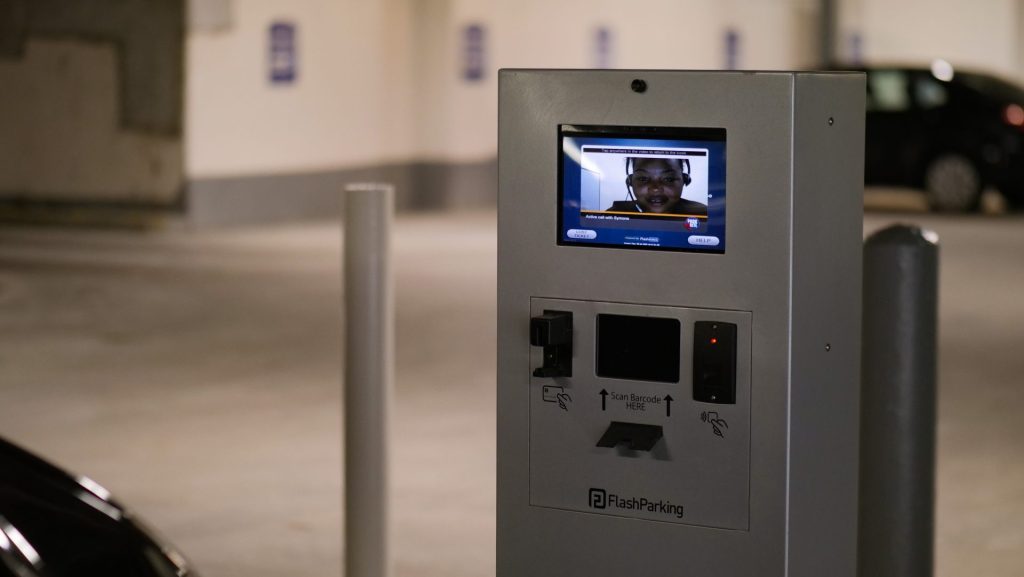
Two-way video transforms parking support from a transaction into a human interaction; reducing confusion, easing stress and reinforcing customer confidence in automated environments. This blog explores how live, face-to-face assistance helps operators deliver faster resolutions, fewer escalations and a more thoughtful parking experience.
Why Two-Way Video Changes the Parking Experience
When someone reaches out for help while parking, they’re usually not having a great moment.
They might be late.
They might be confused.
They might already be stressed before they even arrive.
So, when a screen lights up and a real person appears, something shifts. The interaction becomes more than instructions; it becomes reassurance.
As Gary Means, CAPP, former Executive Director of LexPark, puts it:
“People think, ‘That was really helpful. I didn’t expect to see somebody on the screen.’”
That’s the quiet power of two-way video.
Parking Is More Personal Than It Seems
Parking is often treated as a background operation. But for the people using it, it’s a moment that matters. It’s the first interaction with a hospital, a campus or a city. And when something doesn’t work as expected, that moment can quickly turn frustrating.
Two-way video helps soften those moments. It adds context, clarity and a human presence; without sacrificing efficiency.
As Mark Jesse, former Director of Parking & Transportation at UT Health San Antonio, put it:
“Sure, we are in the parking business, but we are really in the customer service business.”
In environments like healthcare, that distinction matters.
What Changes When You Can See Each Other
The biggest impact of two-way video isn’t the technology itself; it’s what it enables.
It’s a patented approach in parking environments, one Parker Technology owns, but the real innovation is what happens in that moment of connection.
Seeing the situation in real-time reduces confusion. Seeing a calm, professional face reduces anxiety. And seeing another human reminds drivers that help is already there.
At UT Health San Antonio, two-way video played a key role in maintaining a supportive experience even as parking facilities became fully automated.
“The point of automating parking operations is to make it easier and more convenient for students, faculty, staff, and visitors…Parker Technology’s customer service platform allows drivers to speak directly with a trained representative who can solve problems they may be experiencing.” – Mark Jesse, former Director of Parking & Transportation at UT Health San Antonio
At LEXPARK, that visual connection helped turn potentially stressful moments into manageable ones.
“To get to a gate and not understand how it works can be intimidating or frustrating to people. When a customer can see somebody on the screen that’s really helpful and friendly, they are able to get through something that might have otherwise been pretty stressful.” – Gary Means, CAPP, former Executive Director of LEXPARK
The result wasn’t just faster exits or shorter calls; it was confidence that automation didn’t come at the expense of care.
When Video Makes the Biggest Difference
Two-way video tends to matter most in moments where clarity and calm are essential:
- A hospital visitor already worried about an appointment
- A student navigating parking late at night
- A parker unsure how to pay or exit
At OHSU, leaders saw how face-to-face assistance helped reduce friction and improve outcomes across their facilities.
“By having that visual connection, our staff can resolve issues more quickly and help people feel more at ease during what can already be a stressful experience.” – Brett Dodson, Campus Access and Commute Services Director
At Indiana University, the same principle applied across a busy campus environment:
“Seeing a real person makes a difference. It changes the tone of the interaction and helps our parkers feel supported instead of stuck.” – Travis Leake, Parking Operations Facility Coordinator
What Operators Notice Over Time
Interestingly, the operational benefits tend to follow the experience.
When interactions are clearer and calmer, teams often see fewer repeat calls, quicker resolutions and less pressure on on-site staff. These aren’t the primary goals; they’re the natural outcome of better communication.
For Park-Rite, two-way video became part of delivering a consistent, high-quality experience across dozens of locations.
“The guest experience matters, and the face-to-face video experience with Parker Technology was going to show our customers that we have top-notch technology.” – Nick Aubrey, Managing Partner
Help that You See
Two-way video doesn’t turn parking into something flashy. It turns it into something more thoughtful.
It helps people feel seen when they need help.
It brings clarity to moments that could otherwise escalate.
And it proves that even in automated environments, human connection still matters.
If you’re curious about how two-way video could support your operation, whether you’re managing a campus, hospital, city or private facility, our team is always happy to share what we’ve learned from real-world scenarios.
Because sometimes, the most meaningful technology is simply the kind that helps someone get on their way, feeling understood.

Kent King
VP of Sales
Kent is the VP of Sales at Parker Technology, he’s been in the parking industry for eight years now with the last 2 years here at Parker. Kent has an extensive background in B2B sales, sales management and project development.
In these roles he became adept at solving customer problems and providing solutions for a variety of projects, from central business districts to large-scale projects in the airport, municipality, and healthcare verticals.